Accessible Websites per WCAG 2.2
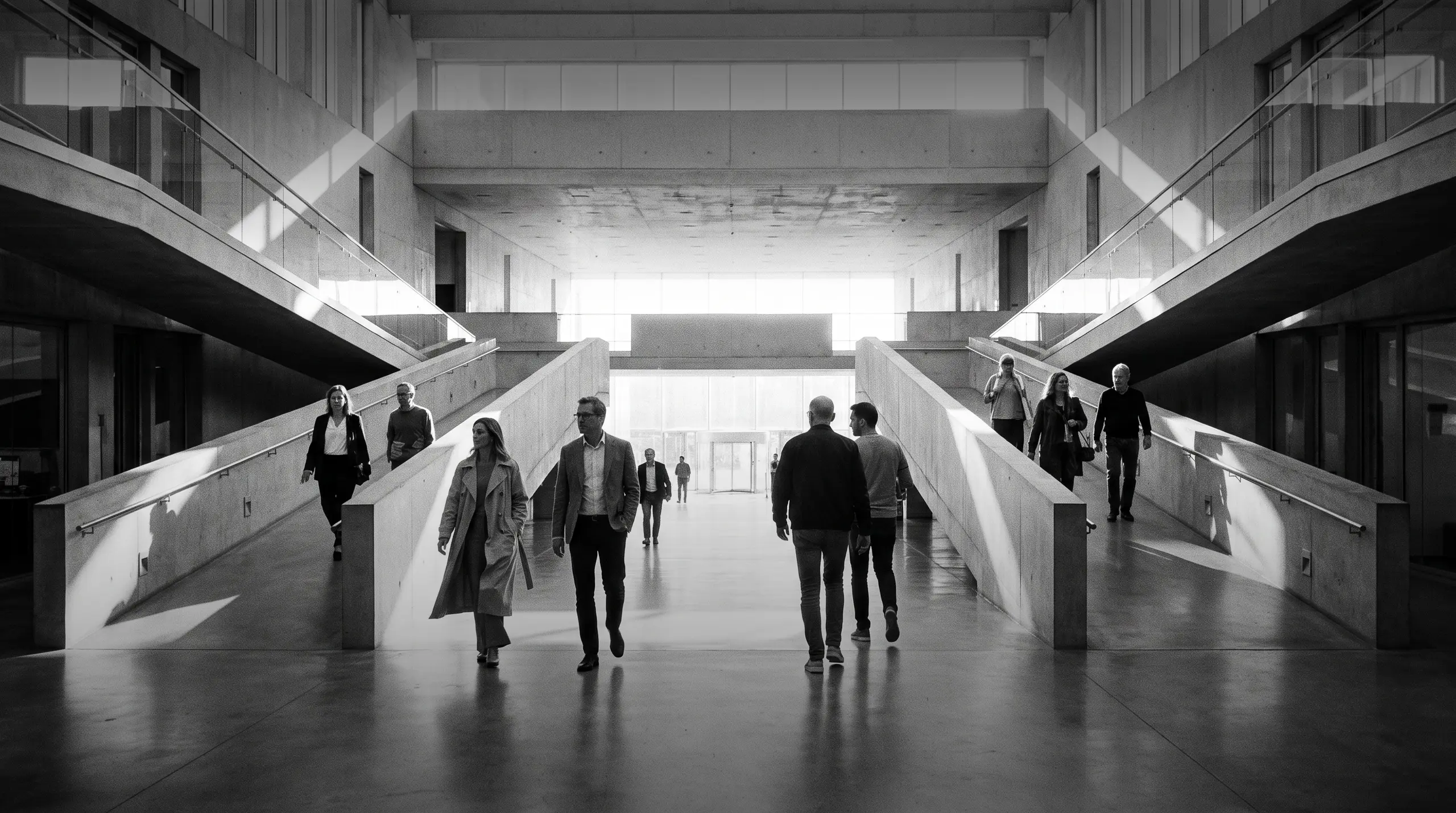
We use AI where it makes us better – here too. HUMAN STRUCTURES is an AI-generated image series, developed and curated by us. It shows what we stand for: structure, clarity, orientation. And how we work: with the tools of today and the standards we have always held.
A better website is a website that reaches more people. Because understandable content, clear operation and clean code exclude no one and improve the digital experience for everyone.
Digital accessibility is legally relevant – and above all a promise of quality. Understandable content, clear operation and clean code make digital offerings accessible to more people and more pleasant for everyone. We test against the relevant WCAG criteria, prioritize clearly and fix barriers directly in design and development. No cosmetic overlays – instead, lasting improvements that also strengthen user experience, SEO and performance.
Discover some of our current web projects:
Access is not a feature. It is part of good design.
Digital barriers exclude people and undermine quality.
Missing contrast, unclear structures or interfaces that cannot be operated by keyboard make it harder to access information and functions. This affects not only people with permanent disabilities, but also users with changing devices or situational needs. Accessibility systematically removes these obstacles. It makes websites more understandable, more robust and reliably usable for more people – regardless of input method or assistive technology.
An audit creates clarity and reliable priorities.
Automated tests detect only part of the actual barriers. A thorough audit combines tools with manual testing of structure, keyboard navigation, screen reader use, contrast and understandable operation. The result is not an anonymous traffic light, but a clear list of issues with effort and impact. This makes it clear which measures need to be implemented first and how progress can be reliably verified.
MOREMEDIA® combines testing, design and technical implementation.
We do not treat accessibility as an after-the-fact widget, but as a quality feature in content, design and code. Findings are documented clearly, prioritized realistically and fixed directly at their source. Automated and manual checks complement each other. Because consulting and implementation sit in one team, less is lost in handovers – and the result is a lasting improvement that also strengthens usability, performance and visibility.
When an audit becomes especially urgent.
An audit makes sense before a relaunch, after major technical changes or when there is uncertainty about existing barriers. Legal requirements have applied to certain products and services since 28 June 2025; there is no blanket obligation for every company website. We clarify the technical need for action and support the implementation. This assessment expressly does not replace individual legal advice.
Test. Prioritize. Fix cleanly.
We combine audits, clear prioritization, and technical implementation – with manual testing wherever automated tools fall short:
- Accessibility audit & BaFG/BFSG check: Systematic testing according to WCAG 2.2 and EN 301 549 with a prioritized list of defects.
- Consulting & impact analysis: Clear technical classification of the requirements and the sensible next steps.
- Accessible implementation: Fixing the defects directly in the code — clean, lasting, and without overlay tricks.
- Accessibility statement: A reliable statement and documentation of the conformity level achieved.
- Monitoring & re-audit: Ongoing checks so your website stays accessible even after changes.
Accessibility that becomes practically achievable.
Accessibility can't be reliably layered onto an existing website with a widget. We test the actual causes and fix them in structure, interaction, content, and code. We combine automated testing with manual checks using real assistive technologies like screen readers, keyboards, and voice control, so the result reflects a reliable overall picture, not just a green tool light. Every finding is documented in plain language and prioritized by effort and impact, so it's clear what to tackle first. Audit, consulting, and implementation come from a single source, so this doesn't turn into an ongoing construction site between multiple providers, but a clean, lasting fix directly in the source code — one that also benefits your search visibility and load times along the way. These are the reasons to make your website accessible together with MOREMEDIA®:
- Clear audit scope defined: We first clarify which standards and legal requirements are relevant to your specific offering. No blanket legal guarantee, just a traceable technical testing framework.
- Tested automatically and manually: Tools only catch part of the barriers. We add manual checks of keyboard, focus, structure, and typical usage paths to automated tests.
- Priorities instead of a bug list: Findings are ranked by impact and effort. Your team gets an actionable order instead of an unannotated audit report.
- Design and development connected: Many barriers emerge in the interplay between the two. We look at contrast, content, components, and code together instead of treating symptoms alone.
- Existing websites realistically improved: Not every fix requires a relaunch. We distinguish quick wins, structural changes, and the limits of the current system.
- Quality anchored for the long term: Guidelines, components, and editorial guidance help prevent new barriers. On request, we add repeat audits after changes.
Answers to frequently asked questions about accessibility